Non-Profit Versus Not-for-Profit Organizations: What Is the Difference?
May 22, 2026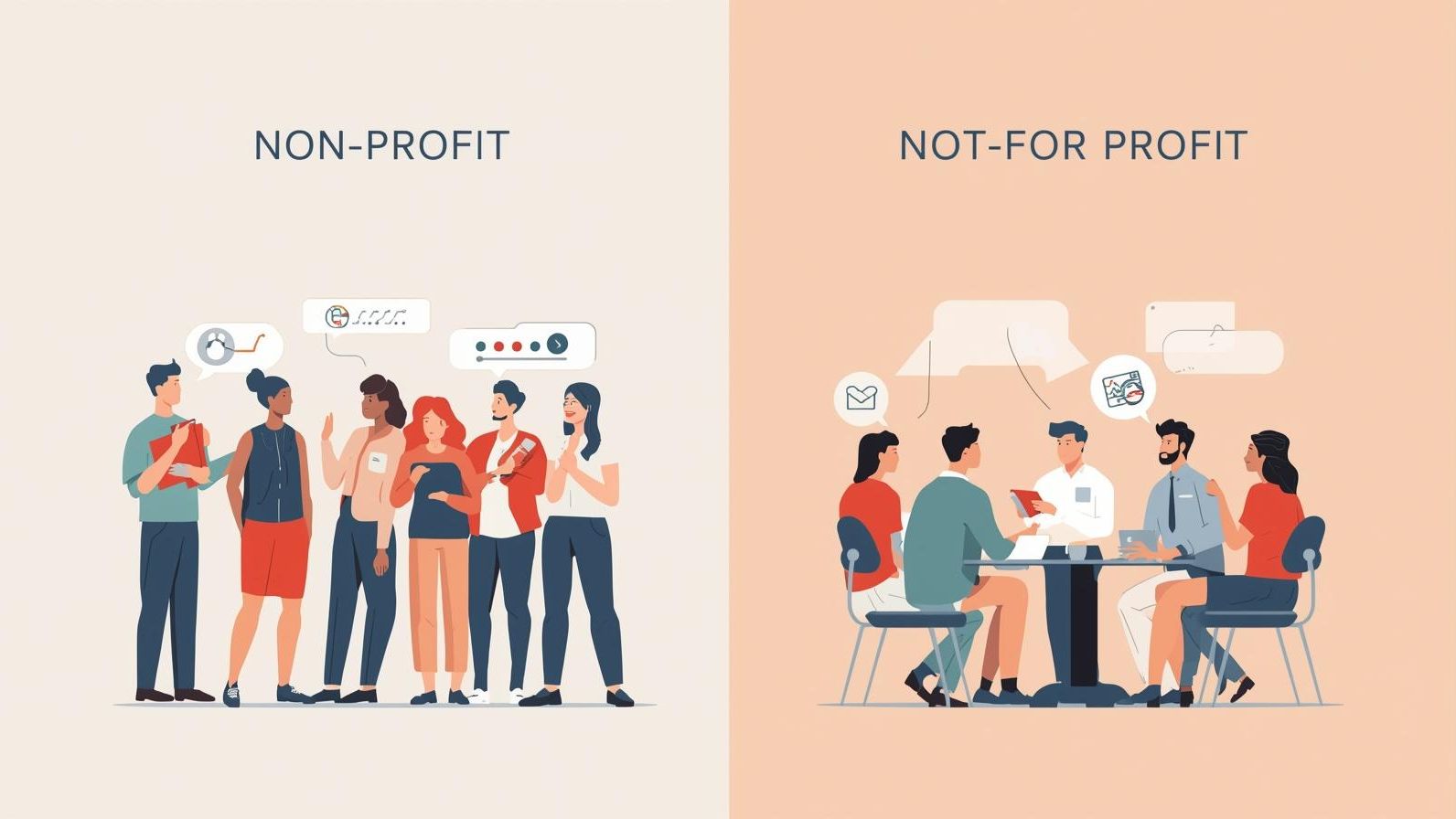
Starting an organization with a mission is exciting, but it can also be confusing when similar terms are used in different ways. Two of the most common terms people hear are non-profit and not-for-profit. At first, they may sound identical, and many people use them interchangeably in everyday conversation. However, when you are forming an organization, applying for tax-exempt status, collecting donations, or planning long-term operations, it is important to understand the difference.
A non-profit organization is usually created to serve a charitable, religious, educational, scientific, community-based, or public-benefit purpose. A not-for-profit organization also does not exist to make profits for private owners, but it is often used to describe groups that serve members, clubs, associations, or shared interests rather than a broad public mission.
Understanding this difference can help you choose the right structure, avoid filing mistakes, and build your organization on a stronger foundation.
What Is a Non-Profit Organization?
A non-profit organization is an organization formed to serve a mission rather than to create profit for owners or shareholders. Any money the organization earns should be used to support its programs, services, operations, and long-term purpose.
For example, a nonprofit may focus on feeding families, supporting youth programs, helping low-income communities, advancing education, supporting religious work, protecting animals, or offering community services. The key point is that the organization exists to serve a cause, not to distribute profits to private individuals.
A nonprofit can still earn revenue. It may receive donations, charge program fees, sell items, host events, receive grants, and pay employees. The difference is that the money must support the organization’s mission instead of being treated as personal profit.
What Is a Not-for-Profit Organization?
A not-for-profit organization is also not created to generate private profit. However, the term is often used for groups that exist mainly for the benefit of members or participants.
Examples may include a local sports club, hobby group, social club, neighborhood association, alumni group, or recreational organization. These groups may collect membership dues, organize activities, and use funds to support group operations.
The main difference is that a not-for-profit may not always have a broad charitable purpose. It may exist to serve a smaller group of members rather than the public. Because of this, a not-for-profit organization may not always qualify for the same tax-exempt or donation benefits as a charitable nonprofit.
Non-Profit Versus Not-for-Profit: The Core Difference
The main difference between a non-profit and a not-for-profit organization is usually the purpose of the organization.
A nonprofit is commonly connected with a public-service mission. It is often formed to help a community, solve a social problem, provide charitable services, or advance a cause. A not-for-profit is often more member-focused and may exist to support a club, group, or shared interest.
Both types can operate without distributing profits to owners. However, the way they are structured, funded, managed, and recognized may be different.
Mission and Purpose
A nonprofit usually has a mission that serves the public or a charitable group of people. Its purpose may be connected to education, religion, poverty relief, health, community development, or another recognized charitable activity.
A not-for-profit may have a purpose that is more limited. It may serve the interests of members, such as a sports team, social group, or local club. This does not make it unimportant, but it may not have the same public-benefit focus as a nonprofit charity.
Use of Money
Both nonprofit and not-for-profit organizations can receive income. The difference is how the income is used.
In a nonprofit, extra money should be reinvested into the mission. This may include program costs, staff salaries, rent, supplies, training, outreach, or future planning. In a not-for-profit, money is also used for organizational purposes, but those purposes may mainly support members or group activities.
Neither structure should distribute profits to private owners like a traditional business would.
Public Benefit
Public benefit is one of the strongest differences. A charitable nonprofit usually exists to benefit the public or a specific charitable class of people. This is important when applying for 501(c)(3) status.
A not-for-profit may benefit a smaller group. For example, a local hobby club may provide value to its members, but it may not be designed to serve the broader public in the same way a charity does.
Is a Non-Profit the Same as a 501(c)(3)?
A nonprofit and a 501(c)(3) are not automatically the same thing. This is one of the biggest areas of confusion for new founders.
A nonprofit is usually formed at the state level. This means the organization may be registered as a nonprofit corporation in its state. However, that does not automatically make it federally tax-exempt.
A 501(c)(3) is a specific federal tax-exempt status recognized by the IRS. Organizations that qualify under 501(c)(3) are typically charitable, religious, educational, scientific, or similar public-benefit organizations.
Why This Matters
If you form a nonprofit corporation in your state, you may still need to apply separately for federal tax-exempt status. Without the proper IRS recognition, your organization may not be able to tell donors that their gifts are tax-deductible.
This is why new founders should not assume that forming a nonprofit corporation automatically gives them all the benefits of a 501(c)(3). State formation and federal tax exemption are two different steps.
Can a Not-for-Profit Apply for Tax-Exempt Status?
Some not-for-profit organizations may qualify for tax-exempt status, but not all qualify as 501(c)(3) charities. The correct tax category depends on the organization’s purpose, activities, structure, and who benefits from its work.
For example, a member-based club may fall under a different tax-exempt category than a charitable organization. A social club, business league, or membership association may not be treated the same way as a public charity.
This is why it is important to understand your organization’s true purpose before filing paperwork. Choosing the wrong structure can create confusion, delays, or future compliance problems.
Key Differences Between Non-Profit and Not-for-Profit Organizations
Although the terms are sometimes used loosely, there are several practical differences that founders should understand.
Purpose of the Organization
A nonprofit is usually mission-driven and focused on serving a charitable or public purpose. A not-for-profit is usually activity-driven or member-focused.
Funding Opportunities
Nonprofits, especially 501(c)(3) organizations, may have access to donations, grants, sponsorships, and foundation funding. Not-for-profit groups may have fewer funding options, especially if they do not qualify as public charities.
Donor Tax Deductibility
Many donors prefer giving to 501(c)(3) organizations because donations may be tax-deductible. A not-for-profit organization may not be able to offer the same benefit unless it has the correct tax-exempt status.
Compliance Requirements
A nonprofit with 501(c)(3) status may have annual filing duties, recordkeeping responsibilities, board governance rules, and restrictions on political activity and private benefit. A not-for-profit group may have different or fewer requirements depending on its structure and location.
Public Trust
A registered nonprofit with clear charitable status may build stronger trust with donors, grantmakers, and community partners. A not-for-profit can still be respected, but it may need to explain its structure and purpose more clearly.
Can a Non-Profit Make Money?
Yes, a nonprofit can make money. This is another common misunderstanding.
The term “nonprofit” does not mean the organization must operate with no money or no revenue. A nonprofit needs income to survive, grow, and serve its mission. It may raise funds through donations, grants, events, product sales, membership fees, service fees, and partnerships.
The important rule is that the money must support the organization’s mission. It should not be distributed to private owners, founders, board members, or insiders as profit.
Can a Non-Profit Pay Employees?
Yes, a nonprofit can pay employees, contractors, consultants, and leaders for real work. The payment must be reasonable and connected to actual services provided.
This means a founder or executive director may be paid if they are performing legitimate work for the organization and the compensation is fair. However, a nonprofit cannot be used as a way to create personal profit for insiders.
Good recordkeeping, board approval, and clear compensation policies are important for protecting the organization.
Which Structure Is Right for Your Organization?
The right structure depends on your mission, goals, funding plans, and the people you intend to serve.
If your goal is to serve the public, receive donations, apply for grants, and build a charitable organization, a nonprofit structure with 501(c)(3) status may be the best path.
If your goal is to operate a club, group, association, or activity-based organization mainly for members, a not-for-profit structure may be more appropriate.
Before choosing, ask yourself what your organization will do, who it will serve, how it will be funded, and whether you need tax-exempt recognition.
Common Mistakes Founders Make
Many founders make mistakes because they do not fully understand the difference between nonprofit, not-for-profit, and tax-exempt status.
Mistake 1: Thinking Nonprofit Status Automatically Means 501(c)(3)
Forming a nonprofit corporation at the state level does not automatically give you federal tax-exempt status. You may still need to apply to the IRS.
Mistake 2: Telling Donors Their Gifts Are Tax-Deductible Too Soon
An organization should be careful about promising tax-deductible donations before receiving the proper IRS recognition.
Mistake 3: Choosing a Structure Without Understanding the Mission
Your structure should match your purpose. A public charity, membership club, social group, and business association may all require different planning.
Mistake 4: Ignoring Compliance After Formation
Starting the organization is only the beginning. Nonprofits may have annual reports, IRS filings, board records, donation tracking, and state compliance duties.
Final Thoughts
The difference between a non-profit and a not-for-profit organization may seem small at first, but it can affect your legal structure, funding options, tax status, compliance duties, and public credibility.
A nonprofit is usually connected to a charitable or public-benefit mission. A not-for-profit is often connected to member benefit, group activities, or shared interests. Both can operate without distributing profits to private owners, but they may not qualify for the same benefits or responsibilities.
If you are planning to start a charitable organization, take time to understand the correct structure before filing. The right foundation can help you avoid confusion, protect your mission, and build trust with donors, board members, and the community.
Need Help Choosing the Right Structure?
If you are unsure whether your idea should become a nonprofit, not-for-profit, or 501(c)(3) organization, 501 Solutions USA can help you make the right decision with clear, practical guidance.
Through a personalized nonprofit strategy consultation, 501 Solutions USA helps founders understand their options, clarify their mission, review the correct startup steps, and create a clear path forward before filing paperwork. Whether you are just starting with an idea or preparing for 501(c)(3) status, their guidance can help you avoid confusion and move forward with confidence.
Stay connected with news and updates!
Join our mailing list to receive the latest news and updates from our team.
Don't worry, your information will not be shared.
We hate SPAM. We will never sell your information, for any reason.